
Air Tightness Performance Test
- Home
- Test items
- Air Tightness Performance Test
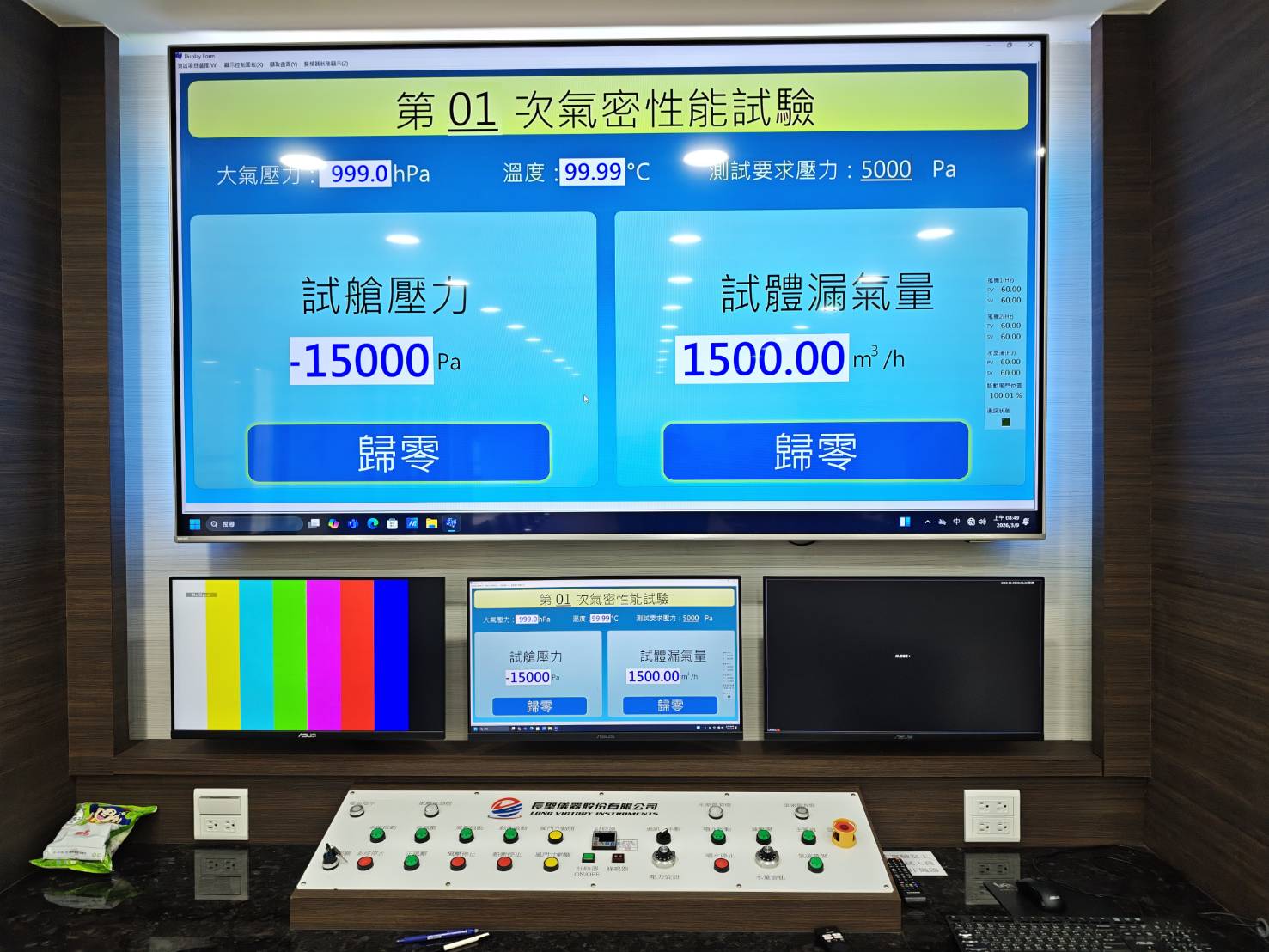
Air Infiltration Performance Test
Evaluates the air leakage resistance and sealing performance of curtain wall systems by applying pressure differentials across the specimen.
Test Principles and Procedures
This test is generally conducted in accordance with standards such as ASTM E283 or CNS 13971 within a high-precision pressure chamber:
- Pressure Differential Simulation:
A specified pressure difference is created across both sides of the curtain wall specimen to simulate wind pressure conditions (commonly 75 Pa or higher). - Precision Airflow Measurement:
Sensitive airflow meters are used to measure the volume of air passing through the specimen under the designated pressure conditions. - Air Leakage Rate Calculation:
The measured total air leakage is corrected by subtracting the chamber’s background leakage, allowing calculation of the air infiltration rate per unit area and verification of compliance with applicable standards.
Why Is Air Tightness Important?
- Significant Energy Savings:
Superior air tightness prevents conditioned indoor air from escaping, reducing HVAC energy consumption and supporting energy-efficient building performance. - Enhanced Acoustic Insulation:
“Air leakage means sound leakage.” Improved airtightness effectively reduces external noise intrusion, creating quieter residential and office environments. - Prevention of Interior Condensation:
Controlling air infiltration helps prevent humid outdoor air from entering wall cavities, reducing the risk of condensation caused by temperature differences and protecting interior finishes. - Improved Indoor Air Quality:
Minimizes the infiltration of dust, PM2.5 particles, and outdoor odors through building joints, ensuring optimal performance of indoor air-conditioning and filtration systems.