
宇逢科技有限公司
TW EN

Positive and Negative Wind Pressure Structural Test
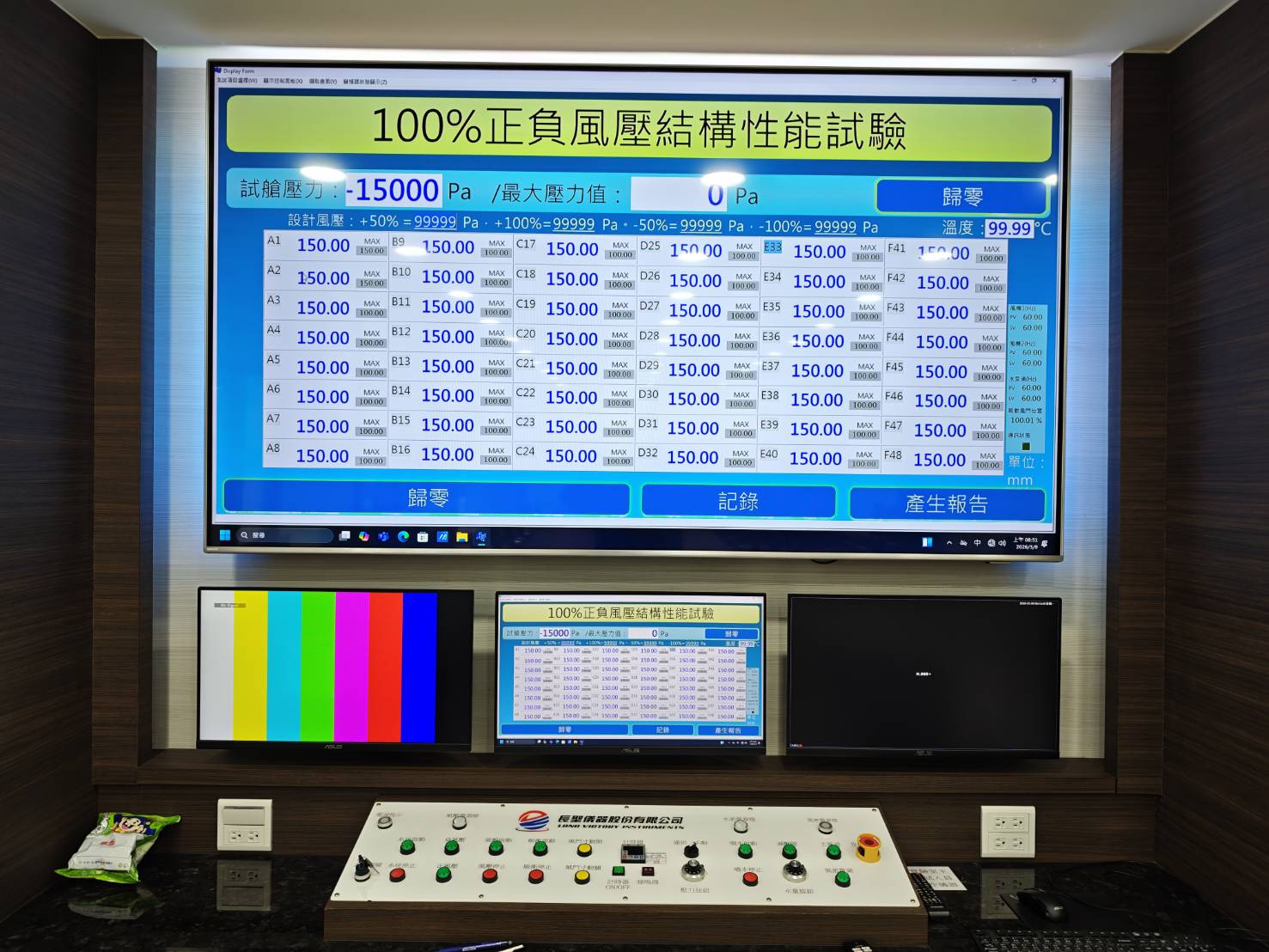
Positive and Negative Wind Pressure Structural Performance Test
Evaluates the deformation and structural stability of the specimen under designed positive and negative wind pressure conditions.
Test Principles and Procedures
This test is primarily conducted in accordance with ASTM E330 or CNS 13972 standards, where extreme pressure loads are applied to the specimen.
Positive and Negative Wind Pressure Simulation
  • Positive Pressure: Simulates wind directly impacting the building façade, generating inward force on the system.
  • Negative Pressure: Simulates the suction effect created on the leeward side or edges of a building. This condition is one of the primary causes of component detachment in high-rise buildings.
Deflection Monitoring
Displacement sensors are installed on critical framing members (such as mullions and transoms) to measure bending deformation (deflection) under pressure loading.
Permanent Deformation Inspection
After pressure removal, measurements are taken to determine whether the components return to their original condition. Standards typically require residual permanent deformation to remain within specified allowable limits.
Ultimate Structural Failure Test
When required, 1.5 times the design pressure may be applied as a safety factor verification test to ensure the system will not experience catastrophic collapse under extreme overload conditions.

Why Is This Test Essential?
Prevention of Collapse and Detachment
Ensures that glass panels will not fracture and that the entire framing system will not detach from the building structure during strong wind events.
Verification of Material Selection
Confirms that the rigidity and thickness of aluminum extrusions, the shear resistance of fasteners, and the glass thickness are adequate to withstand the specified local design wind pressures.
Assessment of Permanent Damage
Verifies that, after exposure to strong wind loading, the façade system will not sustain irreversible deformation, thereby maintaining the building’s long-term appearance and functionality.
Compliance with Building Regulations
This test is one of the most fundamental and critical structural performance requirements for obtaining building occupancy permits and complying with public safety regulations.