
Static Interstory Drift Test
- Home
- Test items
- Static Interstory Drift Test
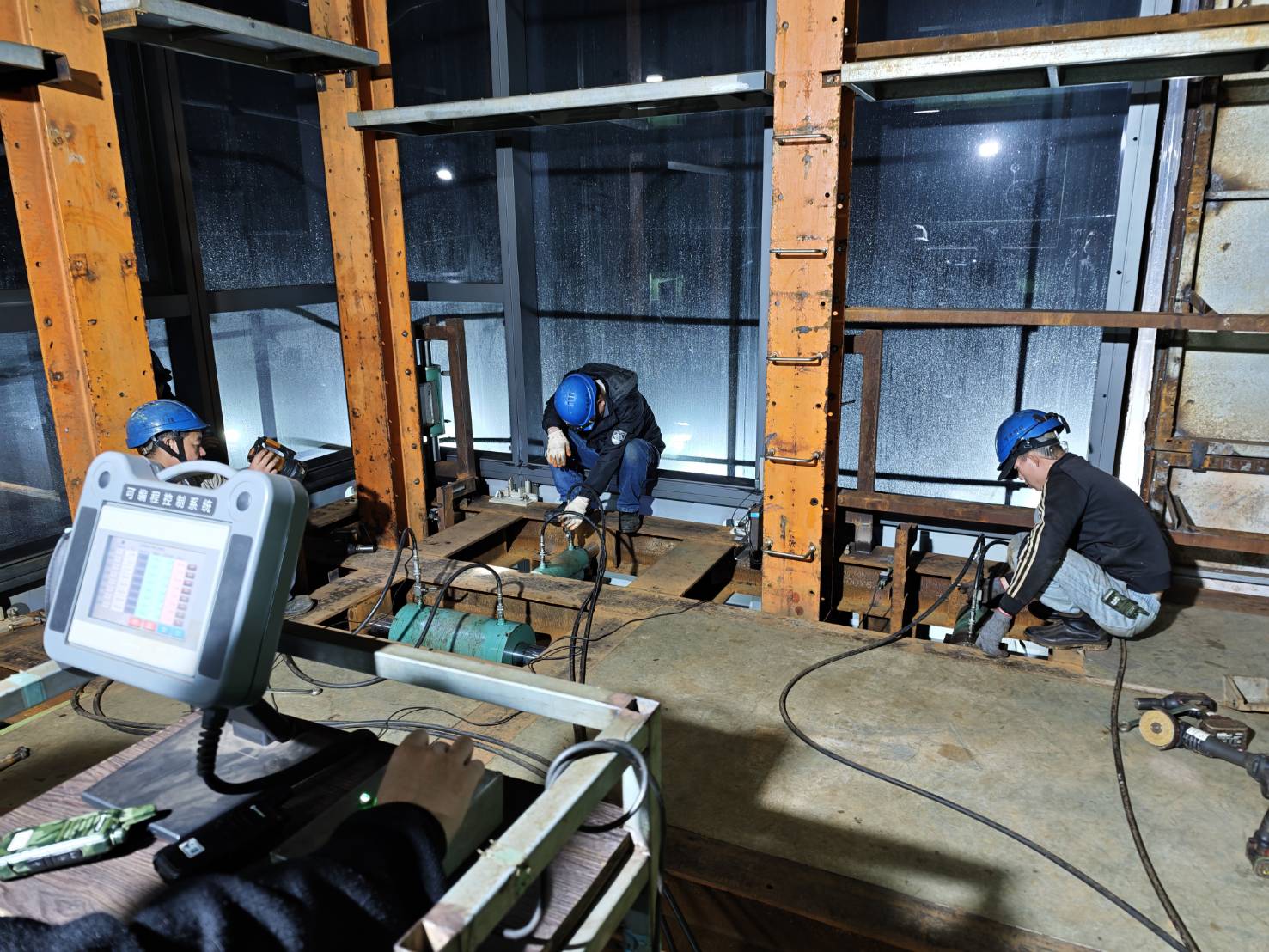
Static Inter-Story Drift Test
Displacements are applied in horizontal, vertical, and multi-directional movements to evaluate the deformation behavior, structural integrity, and damage condition of curtain wall systems under building movement.
Test Principles and Procedures
This test is primarily conducted in accordance with CNS 14281 or AAMA 501.4 standards to simulate inter-story drift caused by earthquakes, wind loads, or structural movement:
-
Mechanical Displacement Simulation:
Hydraulic jacks or servo-controlled actuators are used to apply horizontal, vertical, or multi-directional displacement to the test frame, creating relative movement between upper and lower floors.
-
Simulated Inter-Story Drift:
Specific inter-story drift ratios or displacement values are applied according to project design requirements and applicable standards to verify the deformation tolerance of the curtain wall system.
-
Cyclic Repeated Testing:
Multiple push-pull loading cycles (typically three or more cycles) are performed to simulate repeated seismic movement and observe the curtain wall’s behavior and durability under extreme displacement conditions.
-
Damage and Failure Inspection:
The test evaluates whether glass panels, aluminum framing, anchors, sealants, gaskets, and connection components exhibit cracking, deformation, loosening, or detachment during and after testing.
-
Post-Test Performance Verification:
After completion of the displacement cycles, air infiltration and water penetration tests are typically repeated to confirm that the curtain wall system maintains its sealing performance and functional integrity.
Why Is This Test Important?
-
Protection of Human Safety:
Prevents hazardous failures such as glass breakage, falling debris, or curtain wall collapse caused by excessive building drift during earthquakes.
-
Verification of Seismic Performance:
Taiwan is located in a highly active seismic region, requiring building façade systems to accommodate structural movement. This test verifies the actual seismic displacement capability of the curtain wall system.
-
Reduction of Post-Earthquake Repair Costs:
Confirms that the system can maintain functionality or sustain minimal damage under moderate seismic events, reducing the need for costly replacement of façade components after earthquakes.
-
Maintaining Air and Water Tightness:
Even when structural displacement occurs, seals, gaskets, and waterproofing components must continue to provide effective airtightness and watertightness.
-
Improved Long-Term Durability:
By simulating realistic building movement conditions, potential weaknesses in the curtain wall system can be identified early, improving long-term reliability and safety.